
Feature Guide
CAD integration & dispatch data
However your dispatch data leaves your CAD — a standard feed, one of our integration partners, parsed emails, an API call, or a file drop — we can put it on the screens in your stations. This page covers every route in, and what to check before you start.
What the integration does
Multiple input methods
Standard CAD feed formats, partner APIs, or parsed emails and text messages.
Rich alert content
Incident details, location coordinates, mapping, and unit or personnel assignments.
Live mapping
Google Maps and ESRI layers for real-time visualisation.
Resource monitoring
Unit availability, AVL positions, hydrant locations, hospital status, and other CAD metrics.
Internet-based delivery
Works anywhere with an internet connection — station dashboards or mobile.
Configurable filtering
Route specific incident types or units to selected devices or stations.
Before you start: four questions to ask
Getting answers to these up front saves the most time. Your dispatch centre or CAD vendor will usually have them.
How your data reaches us
Four routes in
Most agencies use one of these. We will tell you which fits your setup.
- Direct feed from CAD in a variety of standard formats
- Parsed notifications by email — see the email parser section below
- One of our integration partners, including Active911, Bryx, iSpyFire, FirstWatch, Emergency Reporting, and Locution
- Our API, or XML and CSV files — both covered below
What we can show
What ends up on screen depends on what your feed can provide. Typically it covers both emergency alerting and everyday information.
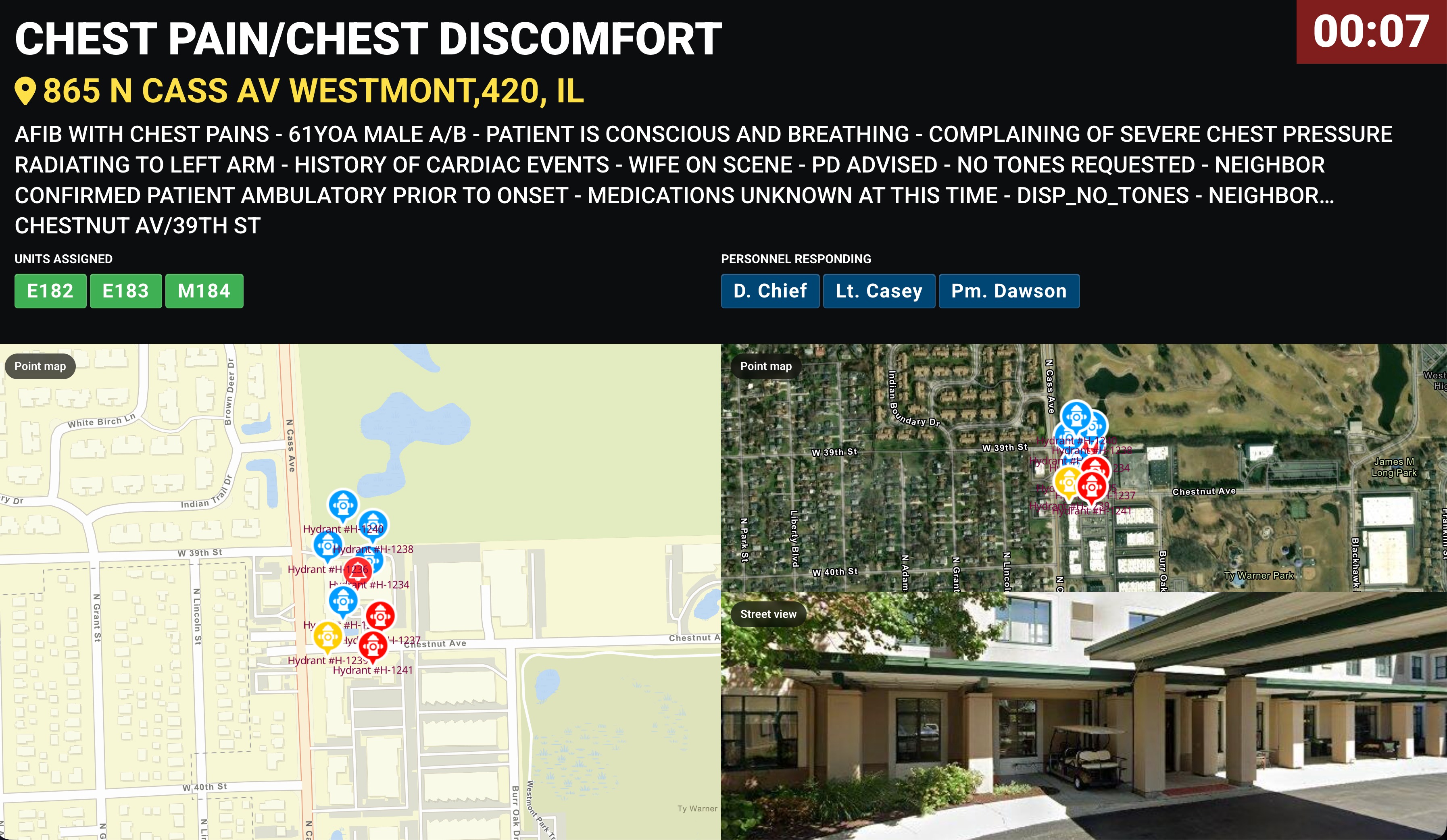
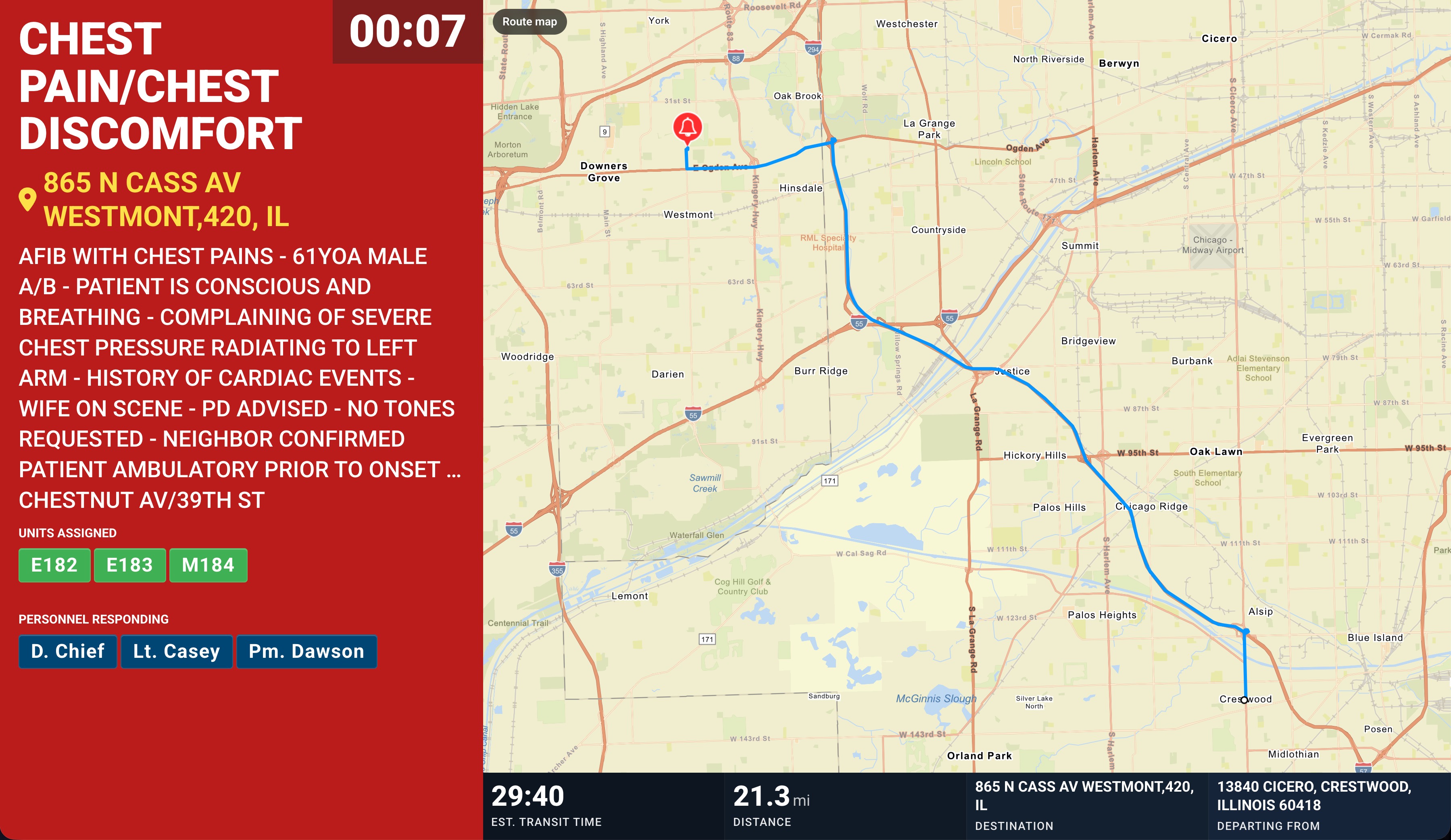
- Real-time alerts and calls of varying types, with details, location, mapping, and unit or personnel information
- Department-wide notifications and emergency updates, not just incidents
- Units available, AVL feeds, units in and out of service, hydrants, and other key CAD metrics
- If you have the data, it is worth asking — we can usually make it work
Alerting screen options
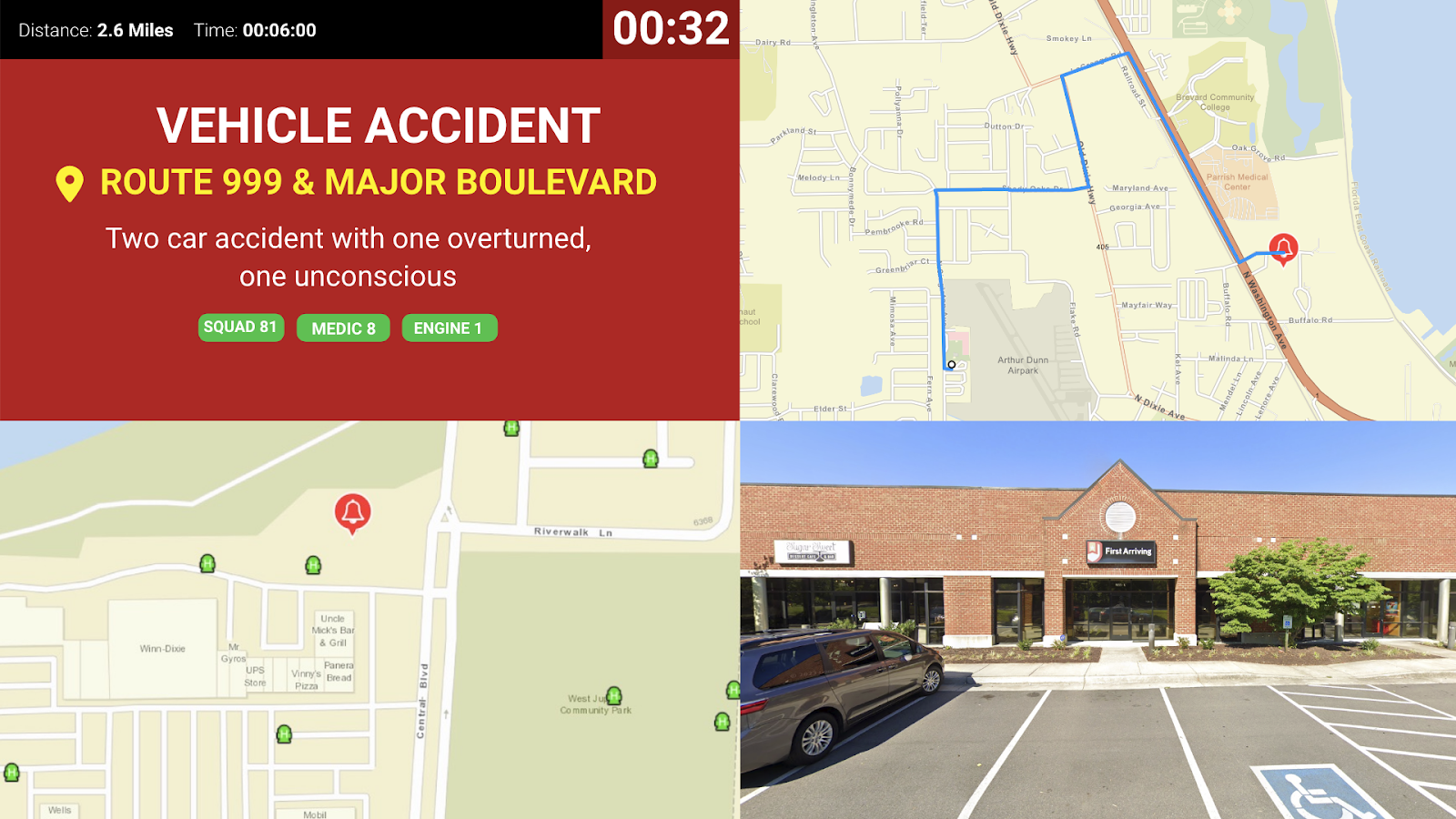
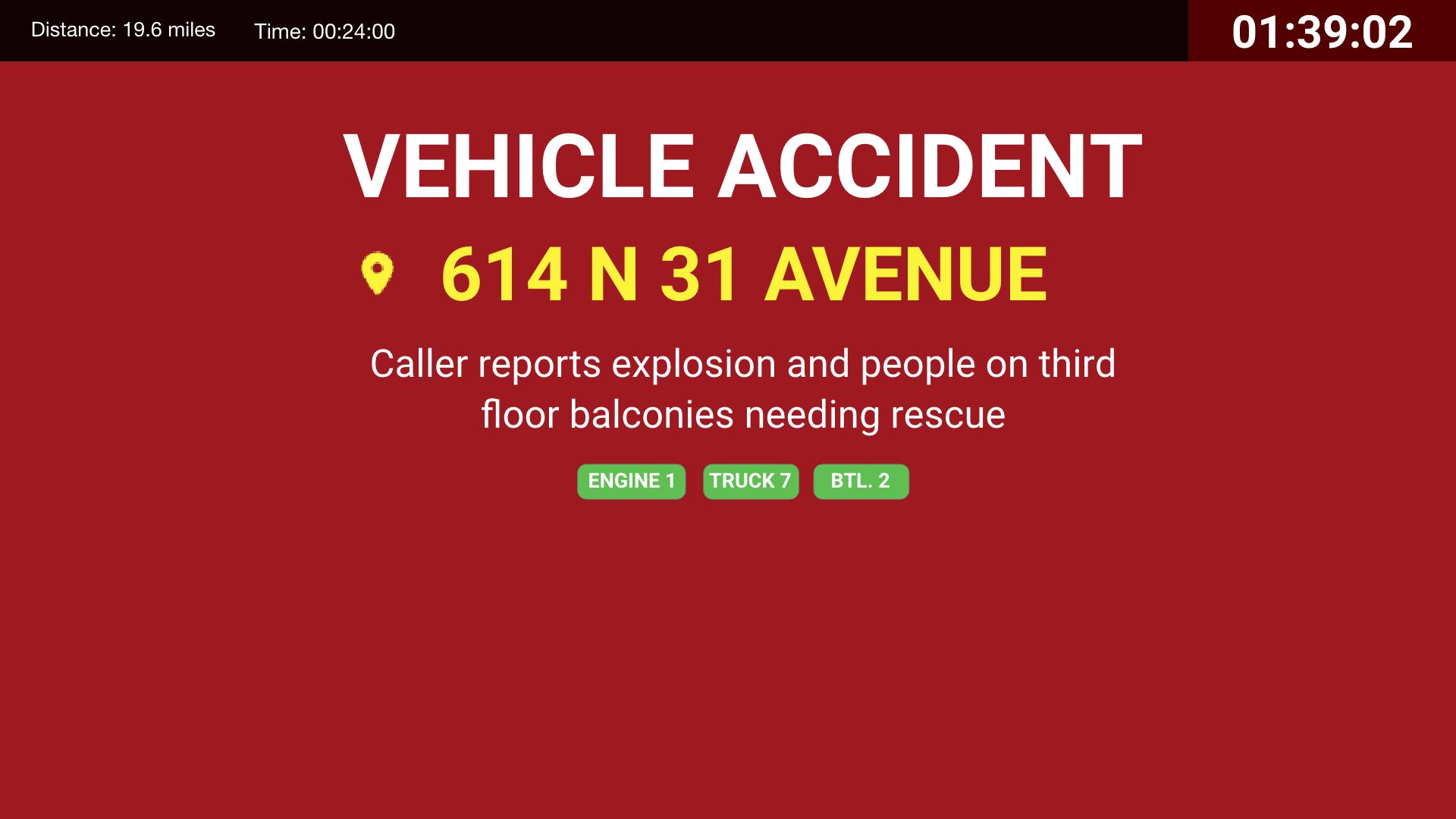
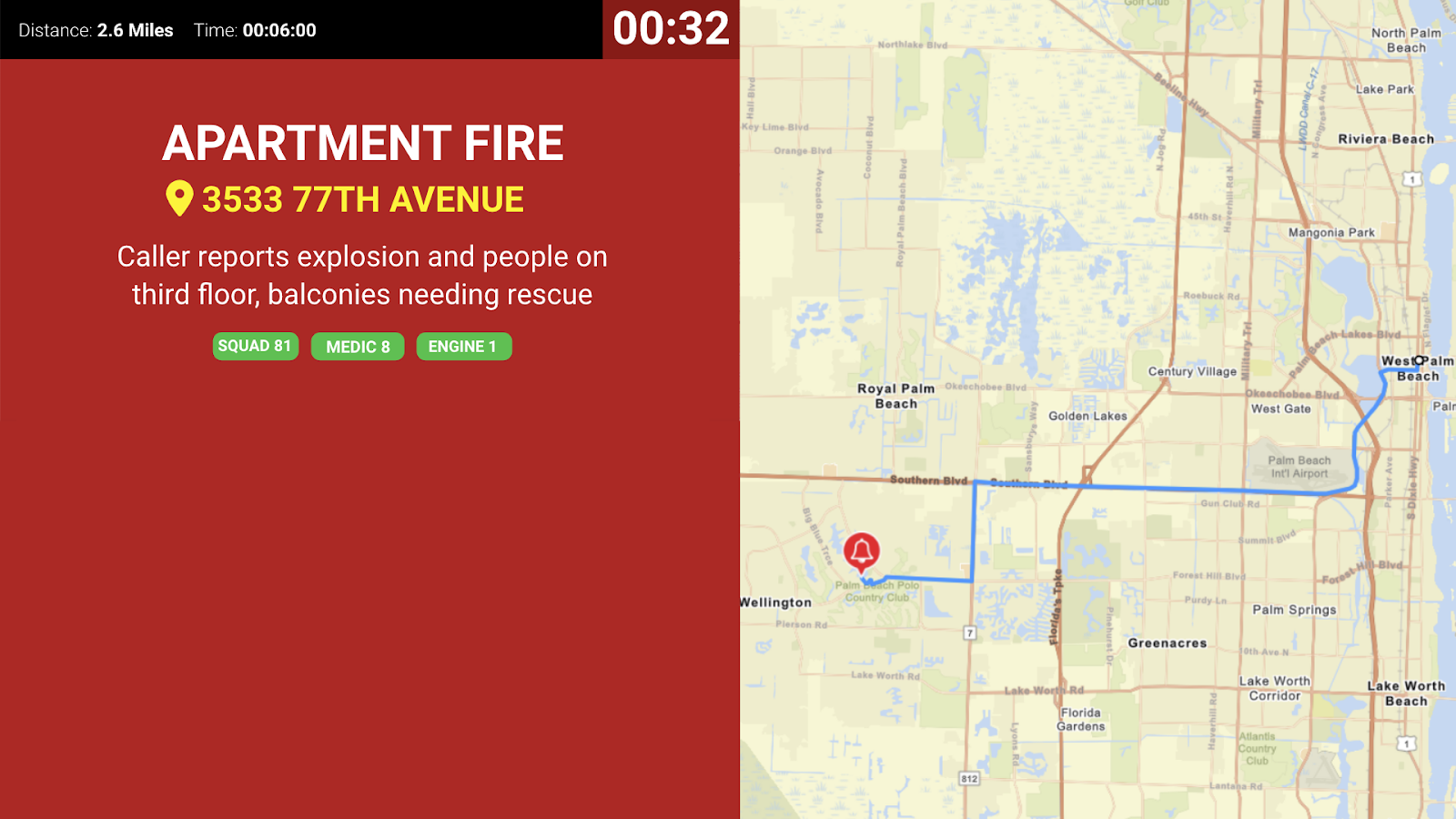
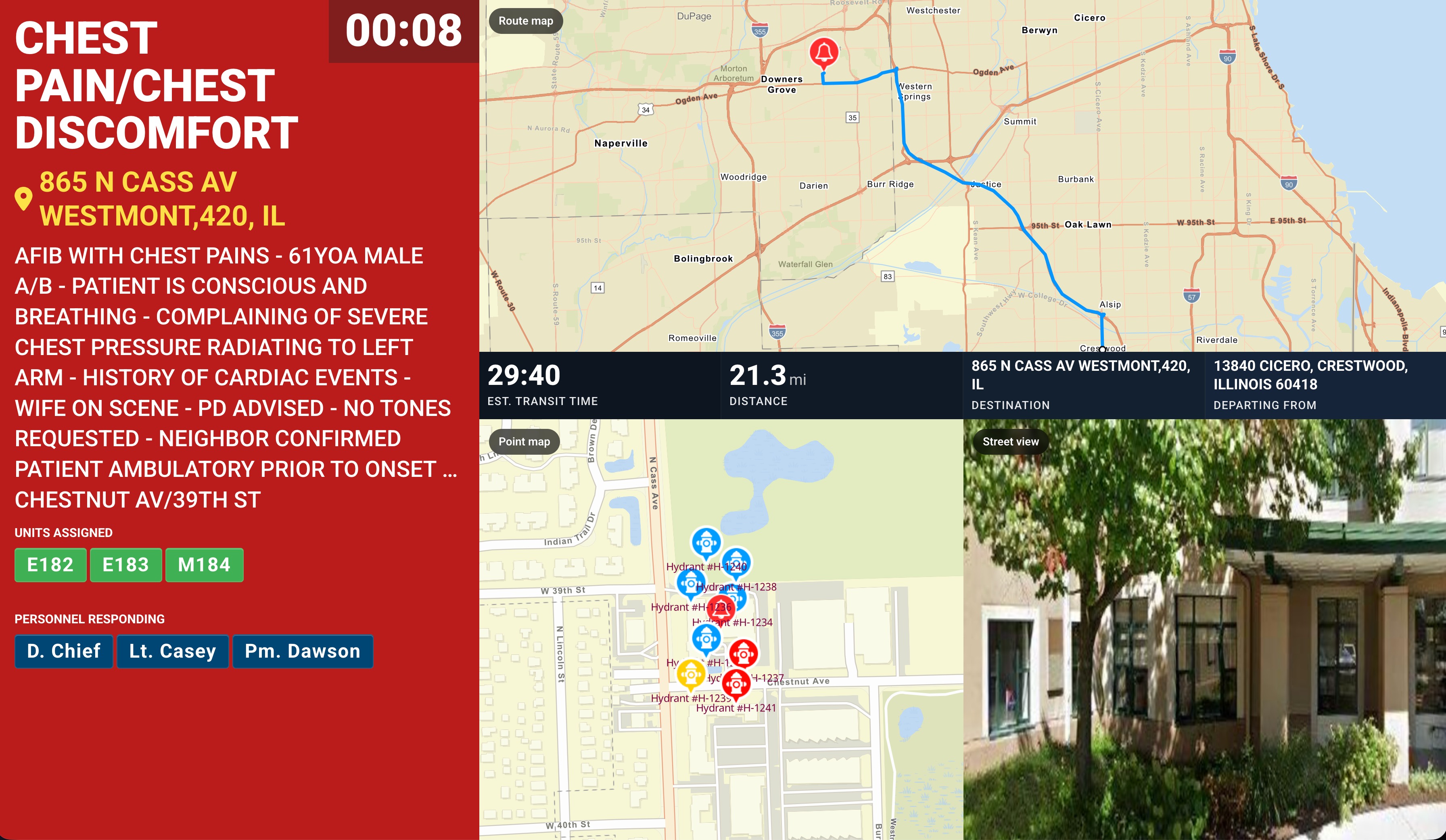
The screens below are a sample. For the full set with a description of each layout, see Response & Call Alerting Screen Options — 3.0 Customers. Any of them works regardless of where your dispatch data comes from.
Email parser
No direct feed, no CAD access, and not using one of our partners? We can read your alerting or call data out of an email or other message instead.
How it works
- We give you an email address or messaging destination for your dispatch centre, or whoever else sends the alerts, to send to
- The body of the message needs to carry the key information of the alert
- For incidents that usually means nature of the call, location, and unit identifiers — the unit IDs are what let us filter which devices get which alerts, which matters across multiple stations
API access
If your CAD or another system can make outbound HTTP requests, it can push alarm data to us directly. We have a RESTful API accepting POST or PUT requests with a JSON payload — we create an endpoint for your agency and issue you a bearer token.
Full detail, including a sample JSON payload and the request headers, is in Sending data to First Arriving via API.
XML and CSV files
Some CAD systems and dispatch centres can export XML or CSV automatically — unit status, for instance. Those go to an SFTP location we provide.
The file must be overwritten in the folder, not written alongside previous copies.
The example below is not a required template — we can work with whatever fields you are able to send, and we tailor what appears on screen to what you need.
Example: unit status in XML
<message>
  <messageID>2</messageID>
  <sentWhen>06/01/2020 22:51:28</sentWhen>
  <messageType>UnitList</messageType>
  <Unit>
    <UnitID>CAR 1</UnitID>
    <UnitDesc>CAR 1 - RESCUE 1</UnitDesc>
    <PositionID>01</PositionID>
    <StatusType>CFS</StatusType>
    <StatusID>2</StatusID>
    <StatusName>ENROUTE</StatusName>
    <AliasTo>3.0</AliasTo>
    <Available>False</Available>
    <Visible>True</Visible>
    <Mileage>0.00</Mileage>
    <EventStatusChangeCount>1</EventStatusChangeCount>
    <PriorStatusType>AUX</PriorStatusType>
    <UnitLocation>9555 KINGS CHARTER DRIVE</UnitLocation>
    <MainType>Fire</MainType>
    <UnitTypeID>12</UnitTypeID>
    <UnitType>CAR</UnitType>
    <EventTypeID>123</EventTypeID>
    <EventType>ALS - BREATHING DIFF</EventType>
    <EventID>123456789</EventID>
    <DeptID>123</DeptID>
    <DeptName>RESCUE 1</DeptName>
    <StationID>10</StationID>
    <StationName>EMS STATION #1</StationName>
    <UnitEventSequenceNumber>0</UnitEventSequenceNumber>
    <Jurisdiction>Default</Jurisdiction>
    <LastUpdateWhen>06/01/2020 18:50:05</LastUpdateWhen>
    <DeptStatName>RES 7-EMS STATION #1</DeptStatName>
    <Heading>0</Heading>
    <AVLRank>10</AVLRank>
    <IsOverdue>False</IsOverdue>
  </Unit>
</message>
Related
Secondary notification only: our platform is built for secondary notification of alarms and situational awareness. Always rely on your CAD or dispatch center for primary dispatch information.
Not sure which route fits your CAD? Open a ticket at our support center or reach us at dashboards@firstarriving.com with the answers to the four questions above and we’ll tell you what is possible.