
Integration Guide
ESRI Mapping
Give your crews the map they actually need when the tones drop. First Arriving’s ESRI integration adds routing, hydrants, satellite imagery, and your own GIS layers to the maps on your alerting screens — whether or not you have an ESRI account.
What we can put on your dashboard
Some of this works for every agency. The rest needs an ESRI account of your own.
All Agencies
Maps, routing, and hydrants
No ESRI account required — we provide the basemap.
ESRI Account Holders
Your own GIS layers
Bring the layers your GIS team already maintains onto the screens in your stations.
Available to every agency
Mapping capabilities
These work without an ESRI account of your own.
- A standard ESRI basemap, available to agencies without an ESRI account
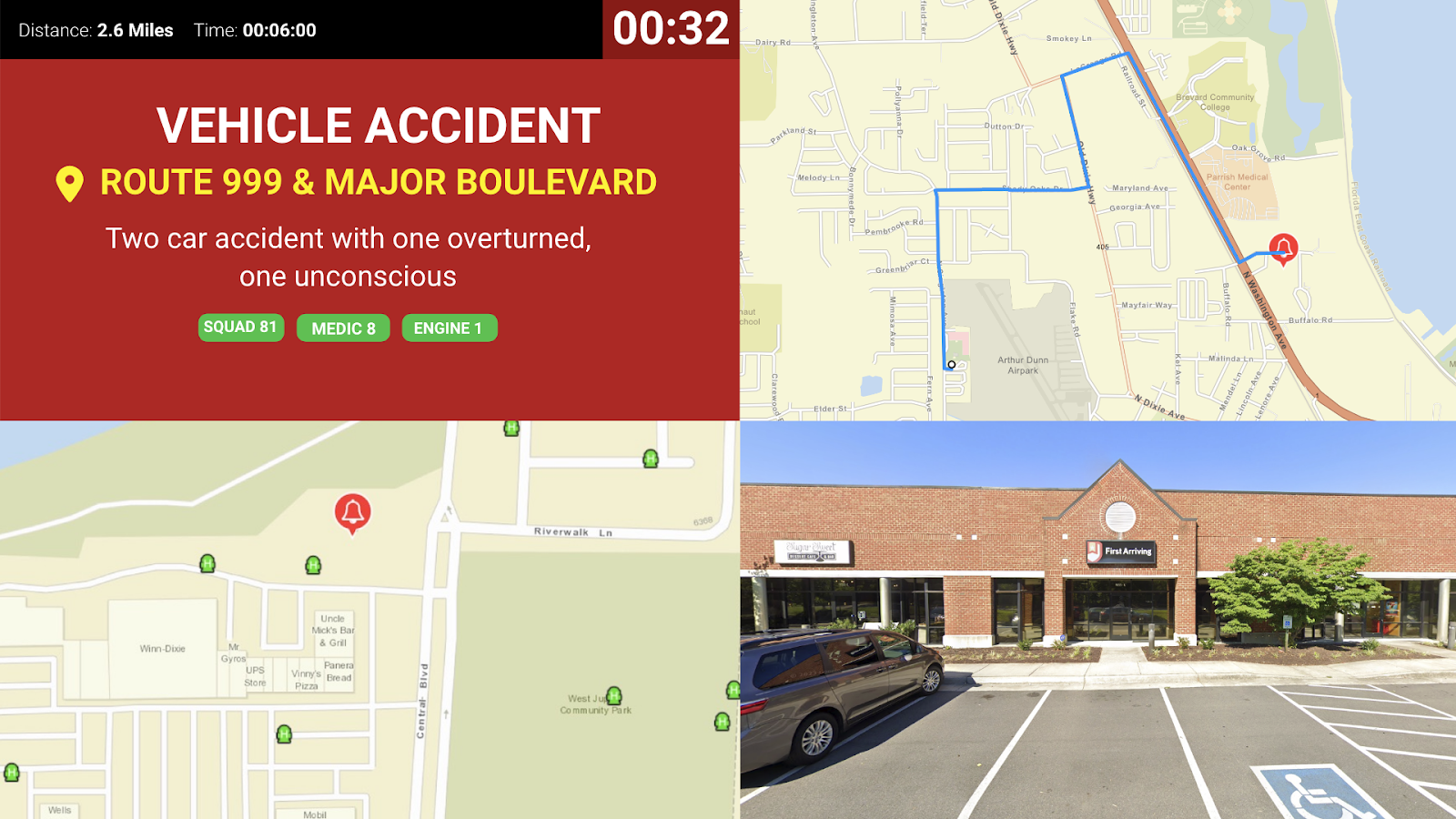
- Routing from the station to the incident location
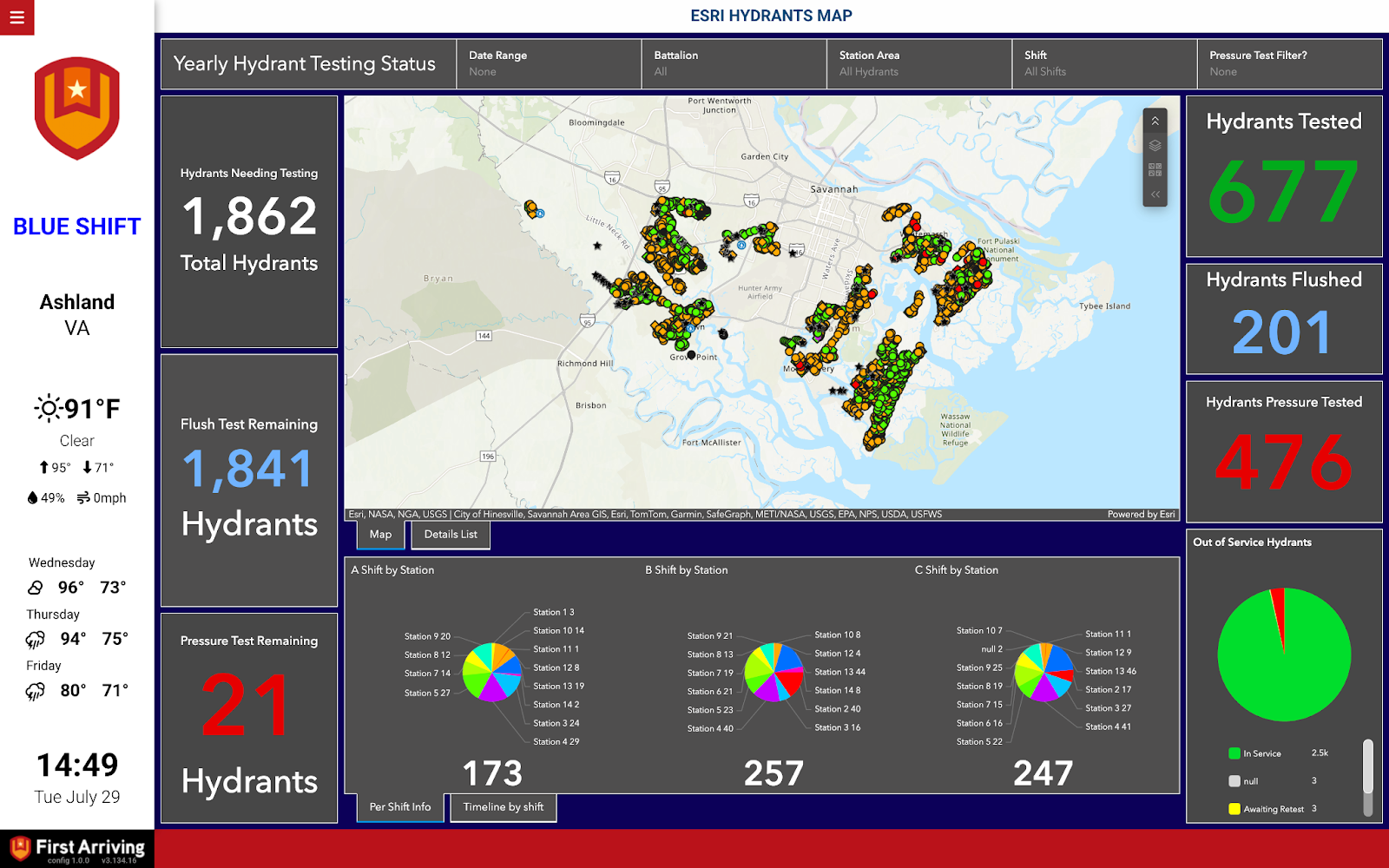
- An overhead view of the nearest hydrants, updated automatically on dispatch
- Satellite imagery on any map
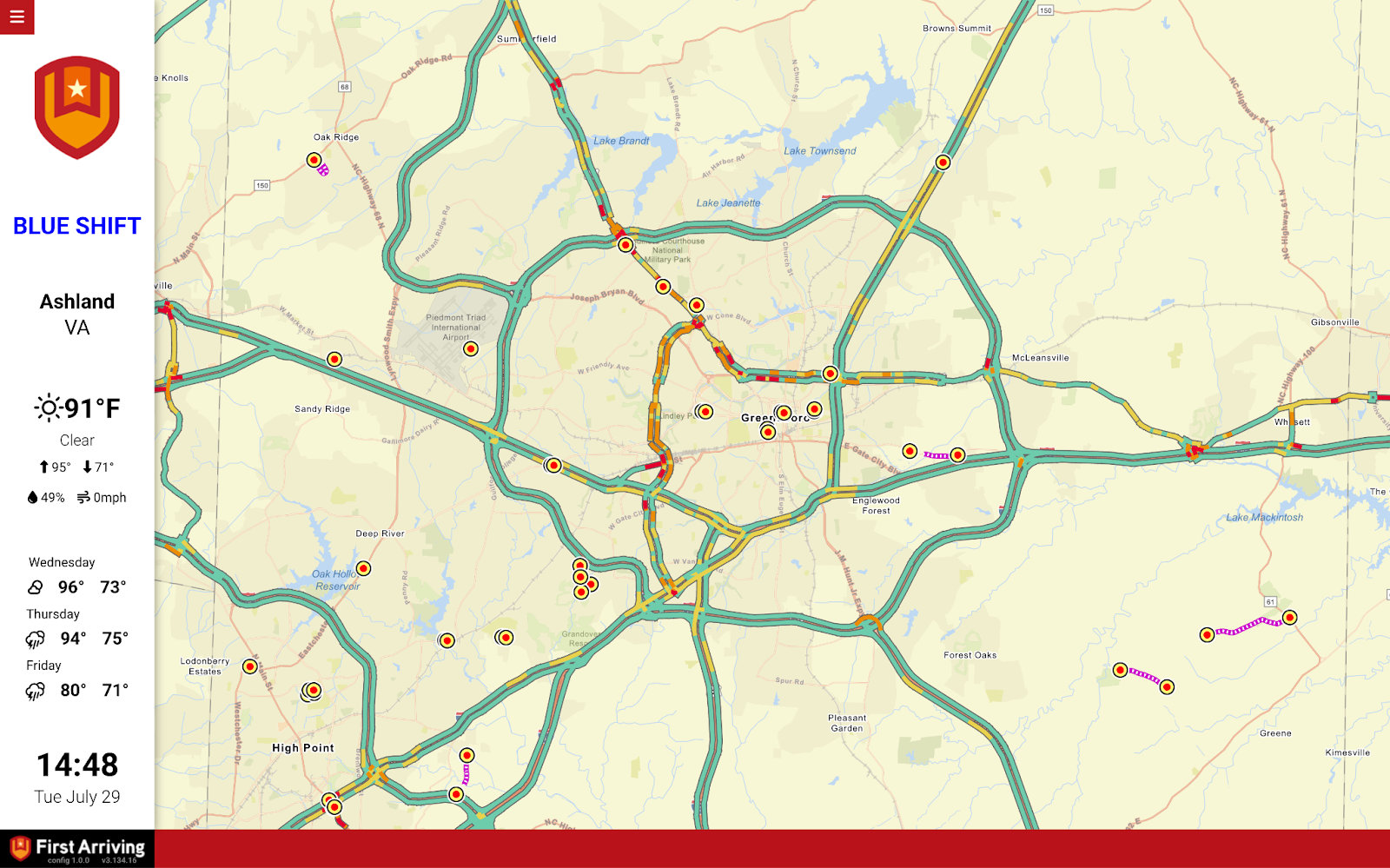
- Display of maps your GIS department has already built
With your own ESRI account
Custom layers
Anything your GIS team publishes can be layered onto your alerting maps. Common examples:
- Gas valves and lines
- Fire station locations
- Jurisdictional boundaries
- Hydrant maps
Additional ESRI dashboards
Any ESRI dashboard you already maintain — response statistics, for instance — can be added to your screen rotation.
What we need from you
Only if you want your own layers or dashboards. The standard basemap, routing, and hydrants need nothing from you.
You don’t need to send common map data: street names and similar details are already part of your base map.
Compatible views
A few of the ways ESRI mapping appears on your screens.
Questions about setup, or want help deciding which layers belong on your alerting maps? Open a ticket at our support center or reach us at dashboards@firstarriving.com and we’ll walk through it with you.